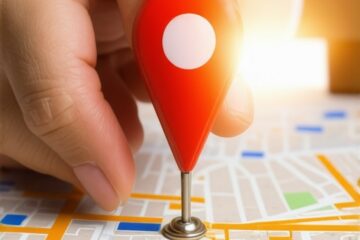
3 Reasons Homeowners Aren’t Seeing Your Plumbing Service on the Map
Your trucks are polished, your technicians are the best in the county, and your response time is second to none. Yet, when a homeowner in your service area searches for an “emergency plumber near me,” your business is nowhere to be found. Instead, they see a competitor three miles further away who hasn’t updated their website since 2012. If this sounds familiar, you are suffering from a lack of effective google business profile seo.
In my experience helping home service businesses dominate their local markets, I’ve seen this frustration play out repeatedly. Recent industry data reveals a staggering reality: over 34,116 plumbing businesses in the U.S. currently fail the “first-click test” on Google Maps. This means that despite having a verified profile, they are virtually invisible to the customers who need them most. To stop being a ghost in the search results, you must master the three pillars of local ranking: Proximity, Relevance, and Prominence. In this guide, we will diagnose exactly why your phone isn’t ringing and how to fix it.
The “Invisible Plumber” Syndrome: Why Your Map Pin is Missing
Before we dive into the algorithmic nuances, we have to address the “Invisible Plumber” syndrome. This occurs when a business doesn’t show up even when a customer searches for the exact business name. If you type “John Doe Plumbing” into Google and your profile doesn’t appear in the knowledge panel or the map pack, you aren’t just ranking poorly – you have a critical diagnostic failure.
In the world of local search, visibility is binary: you are either verified and indexed, or you are filtered out. Common culprits include pending verifications, “soft” suspensions due to suspicious activity, or a sudden drop-off following a core algorithm update. When I perform an audit, the first thing I look for is the “Google Maps Diagnostic Chart” status. Is the profile actually live? Is it being suppressed by a proximity filter? Or is there a duplicate listing causing a “cannibalization” effect where Google doesn’t know which pin to show?
Diagnosing these issues manually can take hours of guesswork. This is why many successful contractors utilize local seo ranking tools to get a bird’s-eye view of their map health. These tools allow you to see where your pin drops off as you move further from your office, helping you identify if you are suffering from a technical penalty or simply a lack of optimization.
Reason #1: The Proximity and Service Area Paradox
Proximity is arguably the #1 ranking factor in the Google Map Pack. However, for plumbers, it is also the most misunderstood. Most plumbers operate as Service Area Businesses (SABs). You likely work out of a warehouse or even a home office and travel to your customers. Many homeowners make the mistake of thinking that because they “serve” a 50-mile radius, Google should show them to everyone in that radius. This is the proximity paradox.
Google’s primary goal is to provide the most local, convenient result to the user. If a homeowner is standing in the city center and your registered business address is 15 miles away in the suburbs, you are fighting an uphill battle against the algorithm. Google calculates proximity based on the “centroid” of the search. If you have hidden your address (as required for most SABs), Google still knows where you are located. If you are trying to rank in a high-density area while being physically located in a rural patch, your visibility will naturally taper off.
One of the most dangerous mistakes I see plumbers make is trying to “game” proximity by using P.O. Boxes or virtual offices in the city center. This is a fast track to a permanent suspension. Google is increasingly aggressive at verifying physical locations. Another common error involves The One Profile Setting That Keeps Your Shop Off the Map – incorrectly defining your service area. If you set your service area too wide (e.g., the entire state), Google may actually dilute your local relevance, making you rank for “nothing” instead of “everything.”
To fix this, you must define realistic service areas and ensure your “Primary Category” aligns with where you actually have the most physical density of customers. You can’t change your physical location easily, but you can improve your local signals to “stretch” your proximity radius further than your competitors.
Reason #2: The Relevance Gap (Keywords vs. Categories)
The second reason you are missing from the map is the Relevance Gap. Google needs to be 100% certain that your business is the best answer for the specific query typed by the homeowner. Relevance is determined by how well your profile matches the search intent. This is where google business profile seo becomes a game of technical precision.
The most common mistake is choosing the wrong “Primary Category.” If you are a specialized plumbing contractor but your primary category is set to “General Contractor” or “Handyman,” you will almost never rank for high-intent keywords like “emergency pipe repair” or “water heater installation.” Google gives significantly more weight to the primary category than secondary categories. If your competitor has “Plumber” as their primary and you have “Heating Contractor,” they will win the map pack every time a user searches for plumbing services.
Beyond categories, you must bridge the gap through google business profile optimization. This involves using the “Services” menu to its full potential. Don’t just list “Plumbing.” You need to list “Sump Pump Repair,” “Drain Cleaning,” “Slab Leak Detection,” and “Tankless Water Heater Maintenance.” Each of these services acts as a relevance signal to Google’s AI.
Furthermore, your business description should weave in hyperlocal keywords naturally. Instead of saying “We serve the local area,” say “We provide emergency plumbing services to the North End, Riverview, and Downtown districts.” This helps Google associate your “entity” with specific geographic locations. For a step-by-step breakdown of how to align these settings, I recommend following The 5-Step Google Business Profile Checklist Every Local Shop Needs Right Now to ensure no technical detail is left to chance.
Reason #3: The Prominence and Trust Deficit
If you and your competitor are both three miles away (Proximity) and both have “Plumber” as your category (Relevance), Google uses Prominence to break the tie. Prominence is essentially Google’s way of asking: “How much does the world trust this business?”
Prominence is built through three main channels:
- Review Velocity and Sentiment: It’s not just about having a 5-star rating. Google looks at how often you get reviews (velocity) and what people are actually saying in them. If a customer mentions “best drain cleaning in [City Name]” in their review, it boosts your prominence for that specific service.
- Local Citations: These are mentions of your Name, Address, and Phone Number (NAP) across the web. However, the game has changed. In 2026, generic directory links are less valuable. Google now prioritizes “Neighborhood Signals” – links from local sports teams, local news outlets, or neighborhood associations.
- Review Engagement: Many plumbers ignore their reviews. This is a mistake. Responding to every review – especially the negative ones – signals to Google that you are an active, trustworthy business.
If you find that your rankings have suddenly plummeted, it might be because a competitor has ramped up their prominence. You can use a google maps ranking service to track how your prominence compares to the “Top 3” in your area. Often, the difference between ranking #1 and ranking #10 is simply a matter of 20-30 high-quality, keyword-rich reviews. If you’ve been hit by a sudden drop, you should investigate Why Your Shop Disappeared From Map Results and How to Get It Back to see if your prominence signals have been flagged or diluted.
Remember, prominence is a cumulative score. You cannot “hack” it overnight. It requires a consistent strategy of gathering feedback and building a local digital footprint that proves you are a pillar of your community.
Preparing for 2026: AI Agents and the Future of Map Rankings
As we look toward the future, the way homeowners find plumbers is shifting. We are moving away from simple “search results” and toward “AI-driven recommendations.” Google’s Search Generative Experience (SGE) and AI agents will soon be the primary way users interact with maps. These AI agents won’t just look for a list of plumbers; they will look for the “best” plumber based on structured data and entity authority.
To stay ahead, you need to ensure your profile is “machine-readable.” This means using high-resolution photos with geotags, keeping your hours updated in real-time, and using the “Q&A” section of your Google Business Profile to answer common customer questions. AI agents will prioritize businesses that provide the most comprehensive data set. If your profile is sparse, the AI will simply skip over you in favor of a competitor who provides a richer data experience.
Using advanced local seo software will become mandatory for tracking how AI agents perceive your business. The metrics we track today – like keyword rankings – will evolve into “Entity Sentiment” and “Authority Scores.” For a deep dive into these upcoming changes, check out my guide on Preparing for the 2026 Google Maps SEO Shift: A Practical Checklist. The plumbers who prepare now will be the ones who own the market when the AI shift fully takes hold.
Conclusion: Taking Back Your Local Visibility
In summary, if homeowners aren’t seeing your plumbing service on the map, it is almost certainly due to a failure in one of the three pillars: Proximity, Relevance, or Prominence. You cannot change where you are located, but you can certainly change how Google perceives your relevance through google business profile seo and how it measures your prominence through customer trust and engagement.
Stop obsessing over national SEO trends that don’t put boots on the ground. Focus on your local map pack. Audit your categories, optimize your services list, and build a review generation engine that never stops. If you are ready to stop being invisible and start dominating your local area, use specialized tools to improve google maps rankings and ensure that when the next pipe bursts in your neighborhood, your business is the first one they see.
Want to learn more about turning views into revenue? Read our guide on How to Get More Phone Calls From Local Maps Without Buying Ads.