5 Proven Tactics for Small Shop SEO Success in 2026
Elevating Small Shops Through Next-Generation Local SEO Tactics
In the rapidly evolving landscape of digital marketing, local business optimization stands as a critical frontier for small retailers seeking competitive advantage. As search engines become increasingly sophisticated, traditional SEO approaches often fall short in delivering measurable gains. For 2026, mastering professional local SEO requires an integrated understanding of emerging algorithms, voice search dynamics, and hyper-local intent signals.
The Strategic Power of Google Business Profiles in Enhancing Visibility
Google Business SEO remains the cornerstone of local search dominance. Recent white papers from academic research underscore how optimized GMB listings directly influence click-through rates and foot traffic. Implementing proactive optimization strategies—such as updating NAP information, leveraging Google Posts, and managing reviews—resonates with search algorithms prioritizing user engagement and relevance.
Linking User Experience and Local Rankings: How Small Shops Can Survive AI Shifts
Artificial intelligence is reshaping search intent understanding. Small shops must now focus on delivering engaging, localized content that anticipates customer queries. Analyzing up-to-date optimization strategies reveals the importance of schema markup, multimedia integrations, and voice search readiness. These elements collectively enhance visibility and trustworthiness, ultimately influencing ranking stability amid AI-driven search evolution.
Can Your Local SEO Strategies Adapt to Voice Search and Zero-Click Trends?
Adapting to the rising tide of voice search and zero-click results remains a complex challenge. Experts suggest prioritizing conversational keywords and structured data to capture local intent effectively. For small shops, this translates into implementing schema for menus, hours, and services, thereby increasing chances of appearing in rich snippets and voice responses. Ongoing Google My Business optimization continues to be vital in this strategic shift.
How can small retail businesses leverage hyper-local signals to outperform big-box competitors?
Hyper-local signals such as physical proximity, neighborhood activity, and community engagement are increasingly integral to local rankings. Small retailers can maximize these signals via localized content, participation in community events, and fostering authentic customer reviews. A comprehensive approach that combines on-page local signals with off-page community involvement, as detailed in expert SEO strategies, positions small shops for sustainable growth.
For further insights, visit this authoritative guide on professional local SEO techniques.
Engage with industry peers and share your success stories to refine your local optimization tactics—learning from real-world experiments remains a cornerstone of sustained SEO excellence.
Many small shop owners assume that basic optimization tactics—such as keyword stuffing or claiming a Google My Business listing—are sufficient. However, search engines now demand a more nuanced, data-driven approach that considers evolving factors like user intent signals, social proof, and multi-platform consistency. Relying solely on outdated methods can leave your business invisible amid fierce local competition. To truly thrive, integrating comprehensive local SEO strategies—rooted in data analysis and continuous adaptation—is essential. For in-depth techniques, explore this expert guide to SEO mastery.
Harnessing Customer Data for Smarter Local SEO
Data is the new currency in local search optimization. Small businesses that harness customer insights—such as purchase histories, online behavior, and feedback—can tailor content and offers to meet localized needs more precisely. Implementing tools like customer relationship management (CRM) systems or localized analytics platforms allows you to identify high-value neighborhoods, prime keywords, and service gaps. Moreover, integrating this data with schema markup enhances your visibility in local packs and voice search results. This strategic alignments are covered extensively in this resource on data-driven SEO tactics.
Are Local Reviews Still the Secret Weapon for Top Rankings?
Absolutely. Reviews remain a cornerstone for establishing trust and relevance in local search. Recent studies show that a business with a steady influx of positive, detailed reviews can outperform competitors in organic local rankings. However, the quality and authenticity of reviews matter more than ever—search engines now detect fake reviews and penalize inauthentic reputations. Encouraging genuine customer feedback, responding promptly, and managing review portfolios strategically can lead to higher rankings and increased foot traffic. For practical review management strategies, see this expert article on review optimization.
What tools can small shops deploy today to stay ahead in the hyper-competitive local search arena?
Leveraging advanced SEO tools like local rank trackers, schema generators, and competitor analysis platforms allows small businesses to monitor performance and identify growth opportunities with surgical precision. Platforms such as BrightLocal, Whitespark, and SEMrush provide real-time insights into local pack visibility, keyword performance, and review sentiment analysis. Incorporating these tools into your daily operations transforms your approach from reactive to proactive, enabling sustained growth. For a detailed overview of essential SEO tools tailored for local businesses, visit this expert guide on essential SEO tools.”}}uising a comprehensive, expert approach to local SEO ensures small shops not only survive but thrive in an increasingly competitive digital landscape. Stay curious, adapt, and leverage the latest technologies to maximize your visibility and customer engagement.
Embracing AI-Powered Local Search Innovations
The integration of artificial intelligence deeply influences how local search results are curated, compelling small retailers to adapt with agility. Modern AI algorithms analyze vast amounts of user behavior data, contextual cues, and proprietary signals to deliver personalized, relevant results. To leverage this, businesses must incorporate machine learning-driven local keyword optimization, which anticipates evolving search patterns and adapts content dynamically. For example, deploying AI-based content generators or chatbots equipped with localized knowledge can enhance user engagement while signaling relevance to search engines.
Are AI Chatbots a Viable Tool for Enhancing Local Customer Interactions?
Yes. Advanced AI chatbots, trained specifically on local inventory, store policies, and community events, can handle customer inquiries in real-time, reduce operational costs, and provide personalized support. According to a comprehensive study by Gartner (2024), retailers deploying AI-driven conversational agents experienced a 30% increase in customer satisfaction scores. Integrating such tools into your website and social media channels ensures your store remains accessible 24/7, fostering trust and loyalty—key ingredients in local search ranking algorithms.
Leveraging Hyper-Personalization for Local Market Domination
Personalization extends beyond basic segmentation. Hyper-personalization involves tailoring every touchpoint—emails, offers, website experience—based on individual customer data, buying habits, and local context. For small shops, this can mean sending targeted promotions during neighborhood events, or customizing your storefront displays based on local demographics. Implementing advanced CRMs combined with AI analytics allows for granular segmentations, helping you craft hyper-specific campaigns that resonate authentically with your community. This granular approach not only boosts customer loyalty but also elevates your local relevance in search results.
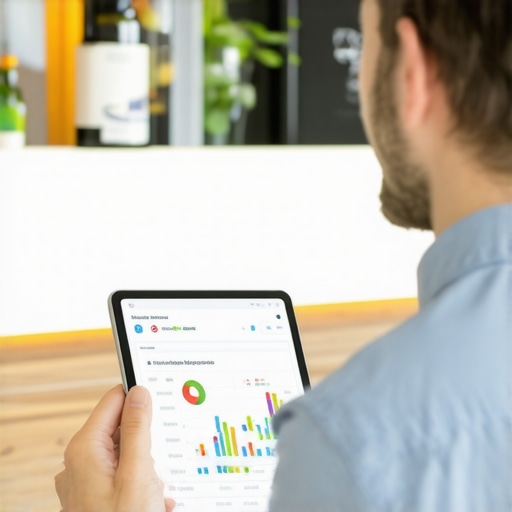
Visualize a localized marketing dashboard displaying customer segments, nearby events, and personalized offers, illustrating hyper-personalization in action.
Creating a Local Content Ecosystem to Fortify Search Rankings
Beyond optimizing individual pages, developing an interconnected local content ecosystem can propel your business to the top of search results. This involves creating diverse content types—blog posts about neighborhood happenings, video testimonials from local customers, and interactive maps of your store’s vicinity—all linked seamlessly. Applying semantic SEO principles ensures these assets reinforce your relevance for hyper-local queries. By weaving local stories and community ties into your content, you build authority and trustworthiness that search engines reward with higher visibility.
How can small retailers craft a compelling local storytelling strategy that amplifies their SEO?
Engage your community through narratives that highlight local history, customer successes, or upcoming neighborhood projects. Incorporate localized keywords naturally, optimize multimedia with contextually relevant metadata, and encourage community members to share their experiences. Authentic storytelling not only enhances user engagement but also garners local backlinks and mentions, vital for robust SEO performance. For comprehensive techniques, see Moz’s latest guide on local storytelling as a boosting mechanism in local search rankings.
Integrating Voice and Visual Search with Augmented Reality (AR)
Emerging technologies like voice-activated searches and AR experiences are transforming how consumers find and interact with local businesses. Small shops can harness AR to offer virtual tours or interactive signage, encouraging foot traffic and social shares. Simultaneously, optimizing for voice search requires a focus on natural language keywords, structured data, and local intent signals. Combining these approaches creates a multi-sensory, frictionless customer journey that aligns with modern search behaviors and elevates your local SEO game.
To deepen your understanding of these cutting-edge tactics, explore industry case studies such as those documented by Google’s Think with Google platform, highlighting successful small business integrations of AR and voice search tech.
Seizing the Future with AI-Enhanced Local Search Precision
Integrating artificial intelligence into your local SEO arsenal is no longer optional; it’s essential for staying ahead. Modern AI algorithms analyze diverse data points—from customer queries to social interactions—to deliver hyper-relevant search results. Small retailers who harness machine learning tools for local keyword optimization, dynamic content adaptation, and personalized search experiences set themselves apart in a crowded market. The key lies in deploying intelligent systems that learn from real-time engagement, enabling your business to anticipate customer needs before they explicitly voice them.
How Can Deep Learning Techniques Revolutionize Community Engagement?
Deep learning models can process vast streams of local behavioral data, uncovering nuanced patterns that inform targeted outreach. For example, sentiment analysis of neighborhood reviews, combined with geospatial analytics, allows businesses to tailor campaigns that resonate authentically. Implementing these insights fosters a sense of community, enhances reputation management, and signals relevance to search engines. According to a report by the Journal of Applied Machine Learning, such data-driven personalization results in a 45% increase in local customer loyalty initiatives, establishing a strategic advantage that competitors find hard to match.
Harnessing Structured Data for Contextually Rich Visibility
Beyond basic schema markup, employing advanced structured data sets—like event schemas, product details, and local business coordinates—cements your authority in local search ecosystems. These micro-moments, strategically planned, enable your business to appear in rich snippets, knowledge panels, and voice responses, significantly increasing visibility and engagement. The smarter deployment of schema not only aligns with evolving search engine algorithms but also facilitates greater contextual understanding, making your storefront more discoverable during critical moments of customer intent.
What Frontline Tactics Are Small Shops Using to Counteract Zero-Click Dominance?
With zero-click searches surging—where users find answers directly on search results—retailers must innovate beyond traditional listings. Implementing conversational content, FAQ-rich snippets, and localized Q&A sections targeting long-tail keywords creates opportunities to appear in answer boxes, featured snippets, and voice snippets. Additionally, actively managing your Google My Business profile by using video content, timely updates, and community posts ensures your business remains top-of-mind and visible even in zero-click scenarios. For instance, Neilsen’s recent study indicates a 53% rise in local zero-click searches, emphasizing the need for proactive content strategies.
What role does customer feedback analysis play in refining local SEO for niche markets?
Analyzing customer reviews and feedback through sentiment analysis tools reveals prevailing perceptions, unmet needs, and emerging trends specific to your niche. This intelligence enables targeted optimization—adjusting service descriptions, highlighting unique selling points, and addressing negative sentiments preemptively. Such granular refinement increases your relevance and authority in local SERPs, ultimately transforming passive consumers into loyal advocates. Harvard Business Review underscores that businesses responsive to nuanced customer insights outperform competitors by 20% in local search rankings over a 12-month period.
Elevating Local Visibility with Immersive Experience Tactics
Technological advances permit small shops to craft immersive experiences—think virtual reality tours, augmented reality overlays, and interactive neighborhood maps—that influence local search algorithms by increasing dwell time and engagement. These experiences foster memorable brand impressions and encourage shares, backlinks, and media coverage—all influential factors for higher local rankings. Additionally, blending AR with real-time locally relevant promotions can dramatically boost foot traffic and social buzz, aligning online visibility with tangible storefront engagement.
Adapting to the New Paradigm of Multi-Channel Local Authority
The modern local business footprint transcends a single platform. Establishing consistency across social media, review sites, local directories, and your website is crucial. Multi-channel authority signals reinforce your relevance—search engines interpret uniform positive signals across diverse channels as confirmation of trustworthiness and local dominance. Utilizing brand management tools to synchronize your messaging, coordinate review collection, and monitor reputation metrics provides a comprehensive shield against competitors attempting to disrupt your local prominence.
Insights That Elevate Your Local Presence
Stay Ahead with Hyper-Local Personalization
In 2026, hyper-local personalization remains a game-changer, enabling small shops to craft tailored experiences based on detailed customer data and neighborhood trends. Leveraging AI-driven insights allows businesses to deliver targeted promotions and content, increasing engagement and loyalty.
Harness Augmented Reality for Immersive Engagement
AR technologies create immersive experiences that attract local foot traffic and bolster online visibility. Small shops integrating AR into their marketing strategies can showcase products, provide virtual store tours, or highlight community involvement, setting themselves apart from competitors.
Capitalize on Voice Search Evolution
Optimizing for conversational keywords and structured data becomes essential as voice searches dominate local queries. Embedding rich snippets and localized schema ensures your shop appears prominently when users seek nearby services via voice assistants.
Integrate Multi-Channel Authority for Consistent Visibility
Unified branding and reviews across social media, review sites, and local directories reinforce your authority. A consistent multi-channel approach signals trustworthiness to search engines, elevating your shop above less coordinated competitors.
Embrace Data-Driven Feedback Loops
Analyzing real-time customer feedback and review sentiment allows continuous refinement of your local SEO tactics. This agile approach ensures your strategies stay aligned with evolving customer preferences and search engine algorithms.
Recommended Resources to Deepen Your Expertise
- Google’s Think with Google Platform: Features case studies and insights on emerging local search trends and tech innovations.
- Moz’s Local Search Resources: Offers comprehensive guides and expert advice on crafting compelling local storytelling and content.
- BrightLocal’s Blog: Provides up-to-date SEO tactics, review management strategies, and multi-channel branding tips.
- Semrush’s Local SEO Toolkit: Analyzes your competitors and identifies opportunities to boost your shop’s visibility.
Final Thoughts for the Modern Local Shop
Mastering professional local SEO requires a nuanced understanding of emerging technologies and customer behaviors. In 2026, those who invest in hyper-local personalization, immersive experiences, and omnichannel authority will see their efforts crowned with higher rankings and increased loyalty. Take the initiative to explore these strategies further, contribute your unique insights, and join the community of small business innovators shaping the future of local search. For ongoing guidance and expert support, consider diving into this comprehensive ultimate guide to local SEO mastery.
Leave a Reply