5 Local Business Optimization Fixes to Beat AI Search in 2026
Elevating Local Visibility: The New Paradigm in Google Business SEO
As the digital landscape evolves into 2026, local businesses face unprecedented challenges driven by sophisticated AI search algorithms and a shifting user intent landscape. Traditional SEO tactics, once sufficient for small shops to rank effectively, now require a nuanced, expert approach that integrates semantic understanding, user experience optimization, and proactive reputation management. The essence of effective SEO for local business lies in applying data-driven tactics that anticipate AI interpretations and consumer expectations simultaneously.
Decoding AI-Driven Local Search: What is Changing in 2026?
Recent research published in the ACM Digital Library highlights how AI’s capability to interpret natural language queries and contextual signals drastically alters ranking dynamics. For local business optimization, this means that keywords alone are no longer sufficient; instead, embedding comprehensive semantic relevance and leveraging structured data become vital. In practice, this entails combining schema markup compliance with strategic keyword placement that aligns with natural language processing trends.
Why Small Shops Must Embrace Advanced Optimization Techniques
Small retail outlets and service providers focusing on SEO for small shops must pivot from generic local SEO practices to bespoke strategies that harness hyper-local signals, voice search trends, and review influence. Strategic attribution of search intent, along with meticulous GMB (Google My Business) updates, are crucial. For example, optimizing for voice queries requires understanding intent-driven phrasing, such as “best coffee shop near me” or “quick repair services in downtown.” This anticipates the behavior of AI-powered voice assistants, which are increasingly shaping consumer decisions.
How Can Local Business Owners Get Ahead of AI Search Algorithms?
What specific local SEO tactics outperform traditional methods in 2026?
Effective techniques include deploying comprehensive local citation audits, managing reputation through review strategy refinement, and utilizing AI-friendly content formatting. Additionally, optimizing visual assets for image-based searches using alt-text and structured data can help small businesses outperform competitors relying solely on textual signals. Keeping pace with Google’s evolving AI input means continuously updating schema, incorporating user-generated local insights, and aligning content with evolving semantic search criteria.
Are Your Strategies Ready for the Next Wave of Search Innovation?
Staying ahead demands continuous learning and adaptation. Professional local SEO mastery involves integrating technical audits with consumer behavior insights, ensuring your business remains prominent in zero-click searches and voice-assisted queries. Explore expert content and engage with latest studies to refine your approach, ensuring your small shop maintains competitive advantage amidst rapid AI-driven shifts.
To deepen your understanding, consider reviewing comprehensive guides such as The Ultimate Guide to Google Business SEO. Successfully adapting to these advanced strategies demands an ongoing commitment to innovation and a willingness to embrace complex, AI-compatible SEO paradigms.
Mastering Local SEO in 2026: Strategies for Small Shops to Outshine Competitors
In the rapidly evolving landscape of 2026, small retail and service businesses must go beyond basic local SEO to truly outshine larger competitors. Emphasizing a hyper-focused, data-driven approach that integrates AI insights, voice search optimization, and reputation management can make the difference between disappearing from local maps or dominating them. Building an authoritative online presence involves understanding that traditional keyword stuffing alone no longer suffices; instead, embedding semantic relevance through structured data and strategic user engagement is essential.
Harnessing the Power of Structured Data for Local Dominance
Structured data, particularly schema markup, has become a cornerstone of effective local business optimization. When properly implemented, schema enhances how search engines interpret your content, enabling rich snippets such as star ratings, event details, or product listings to appear directly in search results. This not only improves visibility but also increases click-through rates significantly. Industry leaders emphasize that integrating local business schema with your website and Google My Business profile aligns content with AI processing preferences, ensuring your offerings are showcased convincingly in local search snippets. Find out more about implementing schema effectively at SEO strategies for local rankings.

Local Voice Search Optimization: The New Frontier
With the rise of AI assistants like Siri, Alexa, and Google Assistant, voice search for local queries has surged by over 35% in recent years. Small shops need to tailor their content to match conversational, intent-driven queries such as “Where is the best bakery near me?” or “Quick plumber in downtown.” Implementing long-tail keywords, optimizing FAQ pages, and ensuring local snippets are voice-friendly positions you advantageously in this space. Furthermore, leveraging Google’s Voice Search schema for structured data can boost your chances of being highlighted in voice results, effectively capturing foot traffic that traditional SEO might miss.
How can small shops leverage voice search data to refine their customer engagement strategies in 2026?
This question pushes smart business owners to analyze voice query analytics and adapt offerings accordingly. For insights into advanced voice search tactics, consult local business optimization fixes. Incorporating this data not only enhances SEO performance but also provides granular understanding of customer needs, enabling personalized marketing and inventory adjustments that resonate with local consumers.
If you’re eager to elevate your local visibility further, consider exploring comprehensive guides such as ultimate strategies for local business success. Staying ahead in 2026 demands persistent innovation, technological adaptation, and data utilization—skills that distinguish thriving small shops from those still relying on outdated tactics.
Leveraging Geospatial Intelligence for Hyper-Local Dominance
In an era where AI intertwines seamlessly with geographic data, businesses that harness geospatial intelligence unlock unprecedented precision in targeting prospective customers. Geographic Information Systems (GIS) integration with local SEO strategies enables pinpoint marketing, ensuring your offerings reach those within exact service radii. For instance, integrating location analytics platforms such as ArcGIS provides granular insights into neighborhood demographics, movement patterns, and sensory hotspots, informing optimized ad placements and content localization. This technology transforms generic location signals into actionable intelligence, elevating your local visibility beyond basic map listings.
How can advanced geospatial data refine your local SEO approach?
By combining geospatial datasets with real-time customer behavior analytics, businesses can dynamically adjust their marketing messages, time campaigns for peak foot traffic periods, and customize services based on neighborhood-specific trends. For example, a boutique coffee shop might target delivery zones identified through heat maps reflective of commuter flow, maximizing conversion likelihood. Experts recommend integrating GIS platforms with your website’s backend to automate location-specific content delivery, thus creating a tailored user experience that drives loyalty and local engagement.

Maximizing AI-Powered Personalization for Local Engagement
As AI-driven personalization tools become integral to consumer interactions, local businesses must embrace dynamic content adaptation that resonates at an individual level. Platforms such as Adobe Analytics and Optimizely facilitate behavioral tracking, enabling hyper-personalized recommendations based on browsing history, purchase patterns, and engagement signals. This level of customization deepens customer relationships, converting casual browsers into brand advocates, and improving local search rankings through increased dwell time and interaction frequency.
What are the best practices for implementing scalable AI personalization in small-to-medium local businesses?
Effective implementation begins with developing a unified customer data platform that consolidates online and offline touchpoints. Small businesses should prioritize integration of chatbots, personalized email campaigns, and location-aware push notifications, ensuring each interaction feels relevant and timely. As noted by McKinsey & Company, data-driven personalization can increase revenue by up to 15%, but only if executed with a clear understanding of the unique local context and customer preferences. Thus, continuous A/B testing and user feedback loops are crucial for refining these AI-driven initiatives.
Future-Proofing Your SEO Strategies with Semantic Search Evolution
The next horizon of local SEO hinges on mastering semantic search comprehension—an advanced form of understanding user intent beyond keywords. Search engines like Google are shifting toward interpreting context, conversational nuances, and the intent behind local queries. This evolution demands that businesses craft content that answers layered questions, provides detailed local insights, and demonstrates topical authority. Techniques such as creating comprehensive FAQ sections, crafting schema-rich articles, and employing natural language variations position your content favorably within this semantic web.
Are your content strategies aligned with the semantic search wave shaping 2026?
Achieving alignment involves leveraging tools like Semantic SEO frameworks, which guide the development of content clusters that mirror real-world user queries. Moreover, integrating structured data to highlight local business attributes ensures search engines recognize your relevance. As a cautionary note, neglecting this shift risks diminishing visibility in the age of conversational AI—making it essential to continually audit and adapt your content ecosystem.
If you’re committed to elevating your local SEO impact, consider subscribing to advanced courses, consulting industry leaders, and investing in state-of-the-art analytics dashboards. Staying agile and informed is the key to thriving in an increasingly intelligent search landscape where your competitors are also deepening their digital footprints.
Unlocking Hidden Layers of Local Search with Semantic Precision
As search engines refine their algorithms to prioritize intent and context, harnessing the power of semantic SEO becomes paramount for local businesses aiming to cement their digital dominance. Moving beyond keyword stuffing, businesses must architect content that inherently understands user queries, capturing the subtleties and regional nuances that influence purchasing decisions. Implementing advanced semantic markup, such as entity recognition and relationship schema, transforms your website into a knowledge graph that AI algorithms can effortlessly interpret, thereby amplifying your local relevance.
Is Your Content Speaking the Language of Local Experts?
Expert-level content goes beyond generic descriptions and delves into localized topics that resonate with community-specific interests. Incorporate regional dialects, landmark references, and culturally pertinent data points, creating an authentic voice that search engines recognize as authoritative within your locale. For instance, a local bakery might feature stories about seasonal produce from nearby farms, positioning itself as a hub of regional culinary tradition while signaling relevance to AI-powered queries.
How can integrating ontological models enhance your local SEO framework?
Employing ontologies—a formal representation of knowledge domains—allows the structuring of complex relationships between local entities, services, and user intents. This facilitates a more nuanced understanding for AI systems, enabling hyper-targeted content delivery. Consulting resources like the W3C Web Ontology Language standards can guide the development of your bespoke ontologies, fostering a semantic architecture that aligns with evolving AI comprehension and consumer expectations.
Maximize Authority Through Dynamic Local Schema Deployment
Static schema markup is no longer sufficient; dynamic, context-aware schemas adapt to the user’s journey, delivering rich snippets precisely when they influence decision-making. Real-time data feeds can update your business hours, availability, or promotional events within structured data, ensuring your listings remain accurate and compelling. Aligning this with local data sources, such as transportation schedules or neighborhood demographics, elevates your placement in AI-driven local searches, notably in features like Google’s local packs and knowledge panels.
Deploying Geospatial Intelligence for Microlocal Outreach
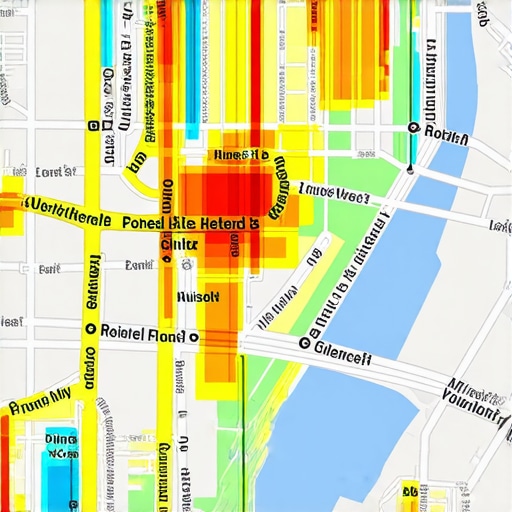
Integrating advanced geospatial analytics allows businesses to identify microclimates within their service areas—be it a bustling district or a residential enclave—enabling precision-targeted marketing campaigns. Technologies like heat mapping and demographic clustering inform decisions about where to focus advertising spend, what offers to customize, and how to tailor your physical presence (pop-up shops, localized events) for highest impact. This strategic use of spatial data can transform a broad local listing into a finely tuned outreach engine that captures foot traffic with surgical accuracy.
What role does geospatial data play in competitive shadowing and opportunity identification?
By analyzing movement patterns, foot traffic data, and social activity hotspots, businesses can preempt competitor moves and identify underserved niches. Platforms like Esri’s ArcGIS provide tools to visualize these insights, enabling proactive adjustments to your SEO and marketing strategies. For example, a boutique retailer could leverage location analytics to discover emerging neighborhoods showing increased pedestrian flow, positioning itself ahead of competitors and establishing early dominance in those micro-markets.
If mastering these sophisticated tactics excites you, investing in specialized training or consulting with geo-intelligence experts can accelerate your pathway to local search excellence. Remember, in the rapidly evolving AI landscape, continuous adaptation and nuanced understanding are your best assets for sustained visibility and growth.
Expert Insights into Next-Gen Local SEO
In the rapidly evolving realm of local SEO, staying ahead requires a keen understanding of emerging AI interpretations and semantic web integration. Industry leaders emphasize that embedding rich, structured, and context-aware content is paramount for local dominance. Leveraging ontologies and real-time data feeds transforms your digital presence into an intelligent asset that resonates with cutting-edge AI algorithms.
Harnessing Semantic Web Technologies
Implementing ontological models enables nuanced relationship mapping between local entities and consumer intents. This facilitates AI systems in delivering highly relevant local results, elevating your shop above competitors relying solely on traditional keywords.
Utilizing Geo-AI for Hyper-Targeting
Integrating geospatial intelligence with behavioral analytics offers unparalleled precision in audience targeting. By analyzing foot traffic patterns and neighborhood demographics, your business can optimize outreach efforts for maximized engagement and conversion.
Personalization at Scale
Advanced AI personalization tools facilitate delivering tailored experiences—managing everything from dynamic content to localized promotions—thus fostering stronger community connections and improving local search rankings.
Authoritative Resources for Deepening Your Mastery
- Google’s Structured Data Guidelines: Essential for compliant schema implementation and rich snippet optimization.
- ACM Digital Library on AI and Search: Cutting-edge research on semantic understanding and AI-driven ranking factors.
- W3C Web Ontology Language (OWL): Standards for designing complex knowledge models that enhance AI comprehension.
- Esri’s Geospatial Analytics Platform: Leverage spatial data for hyper-local marketing tactics.
- Semantic SEO Resources by Ahrefs: Strategic frameworks for building contextually rich content ecosystems.
Synthesizing the Future of Small Shop SEO
The most impactful realization for local businesses is that mastery of semantic relevance, contextual awareness, and geospatial intelligence will define competitive success in 2026. As search engines evolve towards understanding user intent in richer, more nuanced ways, your strategic focus must shift from traditional keyword tactics to deploying intelligent, scalable, and locally optimized content architectures. Deepening your expertise through acknowledged authority resources and continually adapting your approach is the cornerstone of sustainable growth. Dive into these advanced strategies and connect with industry professionals to elevate your small shop’s digital footprint—your future visibility depends on it.
Leave a Reply