Why Small Shop SEO in 2026 Needs Zero Backlinks to Rank
Reimagining Local SEO Strategies: The Disruption of Backlink Dependence
In the evolving landscape of professional local SEO, traditional reliance on backlinks as the primary ranking factor is rapidly diminishing, especially for small businesses aiming for sustainable growth. As search engines refine their algorithms to prioritize user experience and semantic relevance, local shops must explore innovative tactics that transcend outdated backlink-centric paradigms. The shift toward SEO for small shops in 2026 emphasizes the power of authoritative local content, optimized n-gram keywords, and AI-driven contextual signals.
Semantic SEO: The Cornerstone of Effective Local Business Optimization
Semantic search capabilities have dramatically transformed how local searches are interpreted and ranked. Modern algorithms leverage natural language processing to understand the intent behind a query, making google business SEO functions increasingly reliant on contextually rich, schema-structured data. For professional local SEO efforts, embedding structured data, leveraging LSI keywords, and maintaining NAP consistency provide a competitive edge without the need for backlink accumulation.
Why Are Backlinks Falling Out of Favor for Local Businesses?
Is backlinks quality or quantity truly the key to rank dominance in 2026?
Search engines now increasingly assess trust signals such as user reviews, local citations, and engagement metrics over raw backlink volume. The decline in map pack visibility underscores this transition. Small shops can capitalize on this trend by cultivating authentic community signals, optimizing Google My Business profiles, and crafting locally relevant content that resonates with their immediate audience.
Embracing Hyper-Local Content to Outperform Competitors
Content tailored to hyper-local contexts—such as detailed neighborhood guides, customer stories, and local news—serves as a substitute for backlinks, establishing topical authority. Utilizing SEO for local business involves meticulous keyword mapping, voice search optimization, and AI-enabled personalization. These strategies help small shops stand out in crowded local searches, gaining visibility through relevance rather than link metrics.
How Can Small Shops Leverage Data Points for Better Visibility?
Gathering and analyzing data related to local search behaviors—like the hidden Google Business data points—guides targeted optimizations. Implementing insights from Google’s local ranking factors allows small retailers to prioritize high-impact activities—such as review aggregation, Q&A management, and service-based schema markup—without pouring resources into backlink campaigns.
How do authoritative sources validate this backlink decline in local SEO rankings?
Research by Moz and Google’s own updates confirm a trend towards authoritative signals beyond backlinks, emphasizing user-centric factors. For instance, Moz’s Local Search Ranking Factors report highlights that prominent local engagement and optimized user experience are now more impactful than ever. This evolution underscores the necessity for small shops to adapt holistically, focusing on content, reviews, and local signals.
For further insights, consider exploring our detailed guide on how small shops fix low 2026 rankings without backlinks. Engaging with community specialists and sharing your expertise can also accelerate learning and adaptation in this dynamic environment.
To stay ahead, continuous analysis and strategic innovation rooted in local relevance are imperative. Want to contribute your experience or learn advanced tactics? Visit our contact page for expert engagement and personalized consultations.
Revolutionize Your Local SEO Approach with Fresh Strategies
In the rapidly shifting landscape of professional local SEO, relying solely on backlinks no longer guarantees sustainable visibility for small shops. As algorithms advance toward more intelligent, context-aware ranking signals, embracing innovative tactics becomes essential. Crafting compelling hyper-local content, optimizing for voice search, and leveraging AI-driven insights are now the cornerstones for outranking competitors and maintaining relevance in 2026.
The Power of Hyper-Localized Content and Community Engagement
One of the most effective ways for small businesses to strengthen their local presence is through hyper-local content creation. This includes neighborhood guides, storied customer experiences, and highlighting local events—each serving to build topical authority that search engines increasingly value. These efforts should be supported by meticulous keyword research and schema markup, empowering search engines to understand your local relevance without the need for backlink volume. For example, investing in detailed FAQ sections that address community-specific queries can demonstrate your authority and improve your Google My Business profile’s visibility.
Embedding Trust Signals for Better Google Maps Rankings
Trust signals like positive reviews, consistent NAP (Name, Address, Phone Number) information, and engagement metrics are replacing the outdated backlink dependency. Small shops can prioritize review management, encourage satisfied customers to leave feedback, and actively participate in community forums and local social media groups. Additionally, utilizing local optimization tactics—such as service schema markup and local event listings—amplifies relevance and authority, driving higher placement in local packs.
Does Authority Still Require Backlinks or Do Content and Engagement Suffice?
This question remains at the forefront of SEO for small shops as algorithmic sophistication grows. Recent studies, including Google’s own updates, show that quality signals like user interaction, reviews, and comprehensive local content now weigh more heavily than backlink quantity. The expert consensus, supported by Moz’s Local Search Ranking Factors, underscores that trust and relevance—built through authentic community presence—are the true indicators of local authority in 2026. Learn more about evolving ranking factors here.
Developing a strategic, holistic approach involves continuous analysis of your local data points—such as local search query trends, review sentiment, and service schema performance. Tools that track these signals can provide actionable insights, ensuring your efforts are tuned for maximum impact without resorting to backlink schemes that no longer deliver lasting value. For a comprehensive framework, explore our article on identifying critical data gaps in Google Business profiles.
Ready to elevate your local SEO game? Sharing your experience or questions can create valuable dialogue—visit us on our contact page and connect with industry experts who can guide your journey to the top of local search results.
Transforming Data Into Actionable Local SEO Strategies
In today’s sophisticated local SEO landscape, mere anecdotal efforts no longer suffice; data-driven decision-making reigns supreme. Small business owners must harness detailed analytics to refine their visibility tactics continually. From analyzing local search behaviors to tracking review sentiment shifts, the ability to interpret these indicators can make the difference between sinking in obscurity and dominating the map pack.
What innovative tools unlock deeper insights into community-specific search patterns?
Advanced platforms like BrightLocal and Whitespark now incorporate AI-powered analytics that pinpoint emerging local queries and behavioral trends, enabling businesses to proactively adapt their content and service offerings. For instance, by examining hourly search volume fluctuations for service-related keywords, your business can optimize operating hours or launch targeted promotions aligned with local demand peaks.
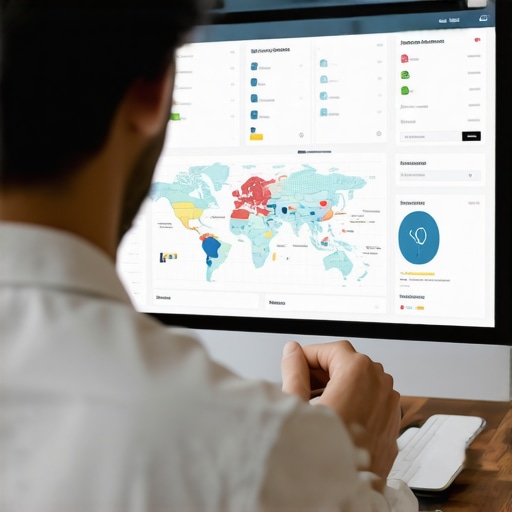
Moreover, integrating Google’s own My Business Insights dashboard seamlessly delivers granular metrics—such as search impressions, customer actions, and photo views—that, when analyzed thoroughly, reveal nuanced customer preferences. This enables a more precise allocation of marketing resources, ensuring efforts resonate authentically within the community fabric.
Deep Dive: Leveraging Local Schema for Signaling Authority
Effective use of schema markup, especially detailed localBusiness and service schemas, amplifies search engines’ understanding of your offerings. By embedding rich, structured data about hours, menu items, events, and unique selling propositions, your site communicates authority and relevance directly to algorithms.
Advanced implementation strategies involve dynamic schema updates tied to local events or seasonal adjustments, thus positioning your business as an active participant in community life. For example, a restaurant can highlight special holiday menus or local catering services through schema annotations, boosting visibility during peak seasons.
According to the authoritative Schema.org documentation, precise and comprehensive structured data significantly enhances rich snippets in local search results, which can drive higher click-through rates even in the absence of backlink advantages. Investing in these technical enhancements becomes a cornerstone of modern professional local SEO.
How Can Voice Search Optimization Reshape Your Local Visibility Map?
As voice assistants become more ingrained in daily life, optimizing for natural language and conversational queries unlocks new avenues for exposure. For small shops, this means tailoring content to answer specific community-oriented questions, such as “Where can I find healthy vegan options near me?” or “Who offers reliable plumbing services in downtown?”.
The key is integrating long-tail keywords that mirror spoken queries, supported by FAQ content and schema markup. Tools like Answer the Public reveal typical user question clusters, guiding strategic content creation that aligns with voice search intent and thus captures an underserved segment of local traffic.
Authoritative studies, including Google’s own Voice Search Optimization Guidelines, emphasize the importance of local context in achieving high ranking for voice-activated inquiries. Small businesses that proactively adapt to this trend position themselves as local authorities across multiple discovery channels.
To deepen your expertise, explore how conversational AI and natural language processing are shaping search dynamics—connecting the dots between data, content, and technical optimization—by engaging with leading voices in Moz’s innovative Voice Search SEO series.
Unlock the Power of Community-Centric Content for Search Supremacy
In an era where search engines prioritize genuine engagement and contextually relevant data, hyper-local content has emerged as a formidable tool for small businesses aiming to transcend backlink dependence. Rather than chasing backlinks, your focus should shift toward creating meticulously crafted neighborhood stories, local collaboration showcases, and real-time event highlights that resonate with your immediate community. Such content acts as a definitive signature of authority within specific locales, thanks to its authenticity and immediacy.
How Can Innovative Content Formats Elevate Your Local SEO Edge?
Adopting diverse formats like interactive maps, community video series, and user-generated stories not only enriches your website’s value but also signals high local relevance to search engines. Incorporate dynamic content elements that respond to seasonal trends, community milestones, and local sentiment analysis—an approach that demonstrates both agility and authority. If executed strategically, these formats foster higher dwell times and social shares, indirectly bolstering your local rank through engagement metrics.
What’s the Role of Micro-Moments in Local Search Dominance?
Micro-moments—those brief instances when users turn to their devices for immediate needs—are pivotal in influencing local decision-making. By mapping out these moments specific to your locality, businesses can optimize content for intents like “where to find quick lunch” or “nearest plumbing emergencies”. Creating dedicated landing pages with fast-loading, localized information ensures your presence is immediate and indispensable, reducing the dependency on backlinks for visibility.

Deepen Connections via Authentic Voice and Personalization
Incorporating a distinct brand voice infused with community dialects and personalized messages accelerates trust-building. Advanced AI tools can analyze local social media conversations, allowing your content to reflect current vernacular and regional nuances. This precision makes your business more memorable and authoritative, fostering organic sharing and engagement—further diminishing reliance on traditional link building.
Leverage Local Schema to Signal Authority Without Backlinks
Implementing sophisticated schema markup enhances your site’s comprehension for search engines, especially when including event schemas, product availability, and business attributes tailored to local contexts. Dynamic schema updates aligned with community events or seasonal promotions communicate active local engagement, positioning your business as an embedded community fixture—enticing search engines to favor your listings based on relevance and trustworthiness.
How Can Data-Driven Personalization Revolutionize Small Shop Visibility?
Harnessing granular analytics—such as local search query trends, customer interaction hotspots, and sentiment shifts—enables tailored content experiences that resonate deeply with your neighborhood audience. Integrate tools like localized heatmaps and real-time review sentiment analysis to refine tactics continually. This bespoke approach fosters loyalty and encourages organic sharing, creating a self-sustaining cycle of relevance accumulation.
What are the most advanced tools driving community-specific search insights?
Platforms like NearMe and LocalizeAI utilize machine learning to identify hyper-specific local search patterns and emerging community needs. These insights help craft hyper-targeted campaigns that position your business as the community’s primary solution provider. Adopting such cutting-edge tools not only informs your content strategy but also accelerates authority building, sidelining traditional backlink strategies.
Empower Your Visibility: Act on Local Engagement Metrics Today
In conclusion, shifting your focus toward community-focused content, real-time data analysis, and sophisticated schema implementation constructs an ecosystem of relevance that search engines recognize and reward. The ultimate leverage lies in demonstrating authority through authentic community connection rather than backlink accumulation.
Are you ready to redefine your local SEO journey? Dive into these advanced strategies, experiment relentlessly, and share your insights to shape the future of local search mastery. Connect with industry experts on our contact page—your next breakthrough awaits.
Harnessing Authority Beyond Backlinks
Industry leaders emphasize that small shops should focus on building genuine local engagement and authoritative content rather than relying solely on backlinks. Strategic content, schema markup, and community involvement craft a strong local presence that search engines recognize as trustworthy.
Leveraging Advanced Content Strategies
Experts recommend adopting diverse formats such as interactive maps, neighborhood stories, and real-time event updates. These formats enhance user engagement, foster community trust, and signal relevance, often outperforming traditional backlink strategies in local search rankings.
Prioritizing Data-Driven Optimization
Utilizing tools that analyze local search behavior and review sentiment can reveal actionable insights. Continuous monitoring and adjustment based on these data points are crucial for maintaining and improving local visibility in competitive markets.
Resources Trusted by Professionals
- Google’s Local Search Quality Guidelines: Provides authoritative best practices for optimizing local listings and understanding ranking signals.
- Moz Local Search Ranking Factors: Offers detailed insights into what influences local SEO success beyond backlinks.
- Schema.org Documentation: Essential for implementing structured data that search engines rely on for context.
- BrightLocal’s Local Search Audit Tools: Facilitates data-driven assessments to identify and address SEO gaps effectively.
- Google My Business Insights: Provides real-time metrics on customer interactions, crucial for refining local strategies.
Expert Reflections on the Future of Local SEO
In 2026, the consensus among seasoned SEO practitioners is clear: Authenticity, relevance, and community engagement will triumph over superficial link-building. Small businesses that integrate these principles into their strategy not only improve rankings but also foster lasting local loyalty. To stay ahead, professionals are encouraged to continuously experiment with innovative content, harness advanced analytics, and deepen community ties. For those committed to excelling in this evolving landscape, exploring our comprehensive guide on mastering professional local SEO can provide the cutting-edge insights needed for sustained success.
Leave a Reply